
Support
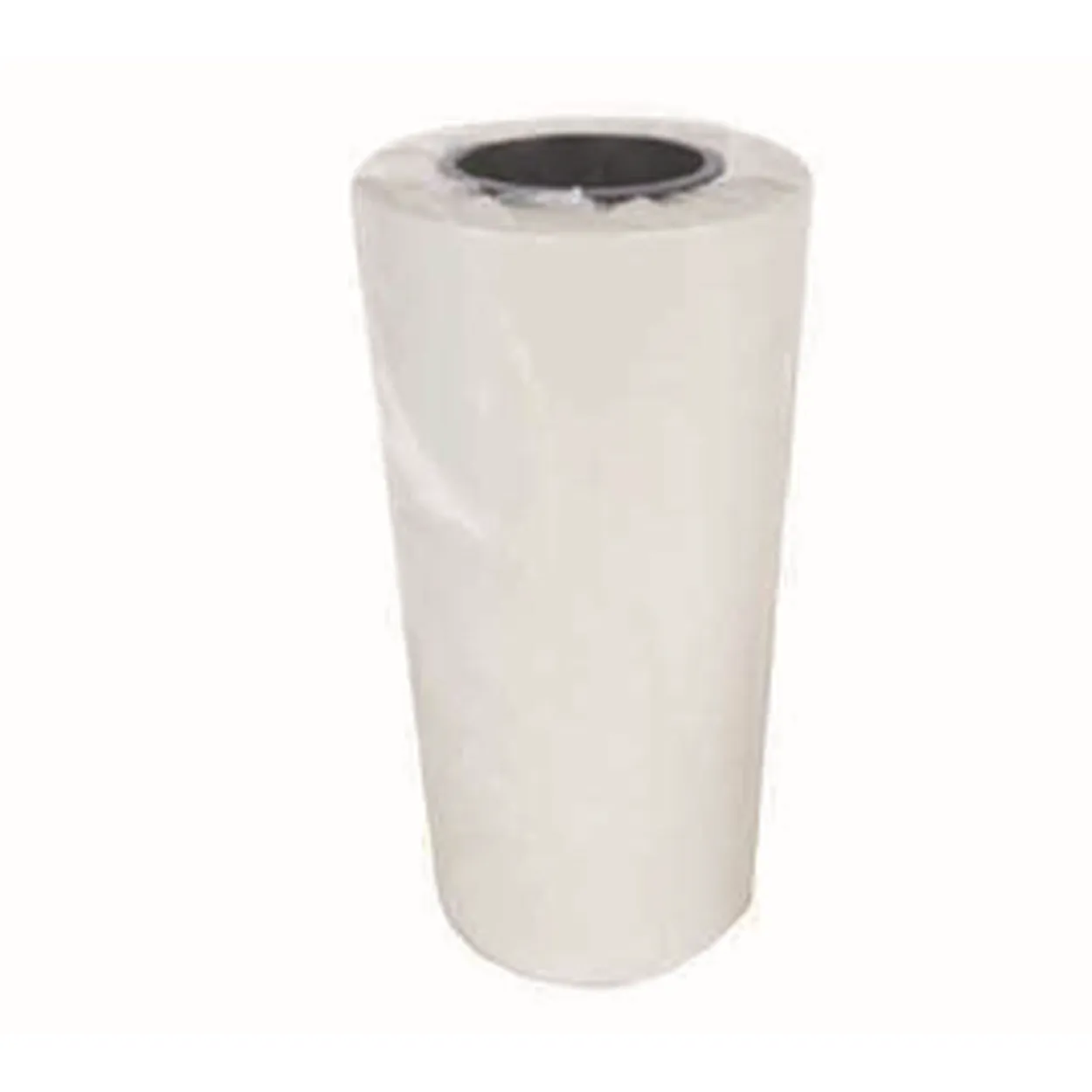
DTF White Film Thermal Transfer Film | Versatile Application, Excellent Color Reproduction
Technical Specifications
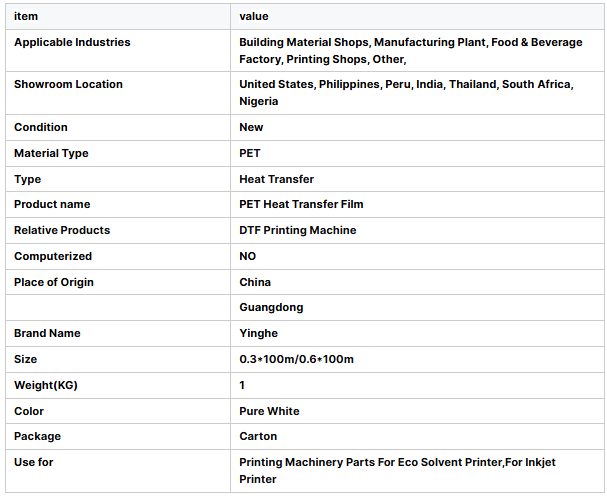
| Parameter/Feature | Details |
|---|---|
| Base Material | PET (Polyethylene Terephthalate) Film |
| Common Sizes | Roll: 30cm/33cm/60cm * 100m; Sheets: A4/A3 |
| Product Thickness | 75μm (includes film base, white layer, adhesive layer) |
| Transfer Temperature | 125-170°C (depending on peeling method) |
| Transfer Time | 8-20 seconds |
| Transfer Pressure | 4-5 psi |
| Peeling Methods | Supports both Hot Peel & Cold Peel |
| Suitable Fabrics | Cotton, Polyester, Blends, Denim, Leather, etc. |
| Shelf Life | 1 year |
Core Advantages
Excellent Transfer Results
High Color Reproduction: The white layer effectively enhances colors, ensuring vibrant, bright, and highly saturated patterns.
Sharp & Detailed: Excellent ink absorption allows for high-resolution output, producing clear and sharp patterns.
Outstanding Durability
Strong Adhesion: The special hot melt adhesive ensures the pattern bonds firmly with the fabric, offering excellent wash and rub resistance.
Soft Hand Feel: The transferred pattern area remains soft and comfortable to wear, without any stiffness.
Wide Applicability
Broad Fabric Compatibility: Achieves perfect transfer on everything from common cotton and polyester to heavy-duty denim and leather.
Strong Equipment Compatibility: Compatible with most DTF printers available on the market.
Application Scenarios
DTF White Film is an excellent choice for:
Garment Customization: Personalized printing on T-shirts, hoodies, team uniforms, jeans, etc.
Fashion Accessories: Decoration for caps, bags, canvas shoes.
Promotional Gifts: Small-batch production of event souvenirs, corporate gifts, group apparel.
Home Textiles: Pattern application on cushions, tote bags, and other fabric products.
Usage Guidelines
The standard DTF printing and transfer process involves these key steps:
Printing: Use a DTF printer to print the pattern onto the film's white coating.
Powdering: Evenly sprinkle DTF hot melt powder onto the printed pattern.
Curing: Pre-cure (approx. 100-120°C) to melt the powder and fix it to the pattern.
Transfer: Use a heat press at 125-170°C and 4-5 psi pressure for 8-20 seconds.
Peeling:
Hot Peel: Peel the film away immediately while hot. Higher efficiency.
Cold Peel: Wait for it to cool down before peeling. Safer operation, better for stretchy fabrics to reduce deformation risk.
FAQ
Q1: What's the difference between DTF transfer and traditional heat transfer vinyl?
A: DTF requires no screens/plates, making it more suitable for complex patterns and small batches. The final product has a softer hand feel and shows more vibrant colors on dark fabrics.
Q2: Why might a transferred pattern crack or peel?
A: This is often related to insufficient transfer temperature, pressure, or time. Please ensure you strictly follow the recommended process parameters.
Q3: How to choose between Hot Peel and Cold Peel?
A: Hot peel is more efficient and suitable for continuous production. Cold peel is safer to handle and more friendly to elastic fabrics, reducing the risk of distortion.
Q4: What should I pay attention to when storing DTF film?
A: Store in a cool, dry place away from direct sunlight and high temperatures to ensure optimal performance.
Send inquiry
/5