
2026-01-12
Laser Machines: The "Precision Tool" Empowering the Upgrade of Traditional Processing - A Comprehensive Guide to Selection and Application
Still worried about the low efficiency and precision of traditional processing? Want to seize the market with customized products but are held back by mold costs and process limitations? In fact, a suitable laser machine can help you break through these bottlenecks.
As a "star equipment" in the advanced manufacturing field, laser machines, with the advantages of non-contact processing, high precision, and high flexibility, have long moved from large industrial plants to micro, small, and medium-sized enterprises, and even set off an upgrade wave in segmented fields such as garment embroidery, advertising signs, and electronic processing. Today, we will use a full set of practical information to help you fully understand laser machines - what can they do? How to choose without stepping on pitfalls? Which industries have already made money with them?
I. What is a Laser Machine?
Simply put, a laser machine is a device that uses high-energy-density laser beams for material processing. Its core logic is straightforward: convert electrical energy into laser energy through a laser source, then focus it into an extremely small light spot via an optical system, which acts precisely on the material surface to meet various processing needs such as cutting, engraving, marking, and welding.
A complete laser machine mainly consists of the following core components:
-
Laser source: Equivalent to the "heart", it determines the type and performance of the equipment;
-
Optical system: Responsible for focusing and transmitting laser beams to ensure processing precision;
-
Worktable: Carries materials and can be moved manually or automatically;
-
Control system: Mostly a CNC system, which can realize automatic processing by importing design drawings;
-
Auxiliary system: Including cooling, air blowing, smoke extraction, etc., to ensure stable operation of the equipment and safety of the processing environment.
II. What Types of Laser Machines Are There?
Laser Machine Classification Revealed: Different Models Meet Different Needs
Many people feel confused when choosing a laser machine for the first time. In fact, classifying by "function" or "laser source type" can help you quickly find the model that suits you.
1. Laser Machines Classified by Function: Targeted Solutions to Processing Needs
-
Laser cutting machine: The core is to "penetrate materials" and cut them into specific shapes. The power is generally 50W-150W+, suitable for metal sheets, fabrics, leather, acrylic, and other materials. For example, it is used to cut logos in the garment industry and light-emitting character sheets in the advertising industry;
-
Laser engraving machine: Focuses on "surface etching" without penetrating materials, and can create patterns and texts of varying depths. A power of 5W-60W is sufficient, which is often used for personalized engraving on wood, stone, glass, leather, etc., such as custom wooden signs and leather bag carvings;
-
Laser marking machine: Used for "permanent marking", such as product production dates, barcodes, logos, anti-counterfeiting marks, etc. With a power of 10W-50W, it has an extremely wide range of applications. Marks on electronic components, metal products, and medical devices are basically made by it;
-
Laser welding machine: Uses laser to melt and connect materials, suitable for precision welding. The power is 100W-500W+, which is often used in high-precision connection scenarios such as automotive parts, batteries, and sensors;
-
Laser cleaning machine: Specifically designed to "remove surface impurities" such as oil stains, rust, and coatings. With a power of 50W-200W, it is very practical in fields such as cultural relic restoration, mold cleaning, and metal pretreatment.
2. Classified by Laser Type: Choosing the Right "Core" Saves Time and Effort[
-
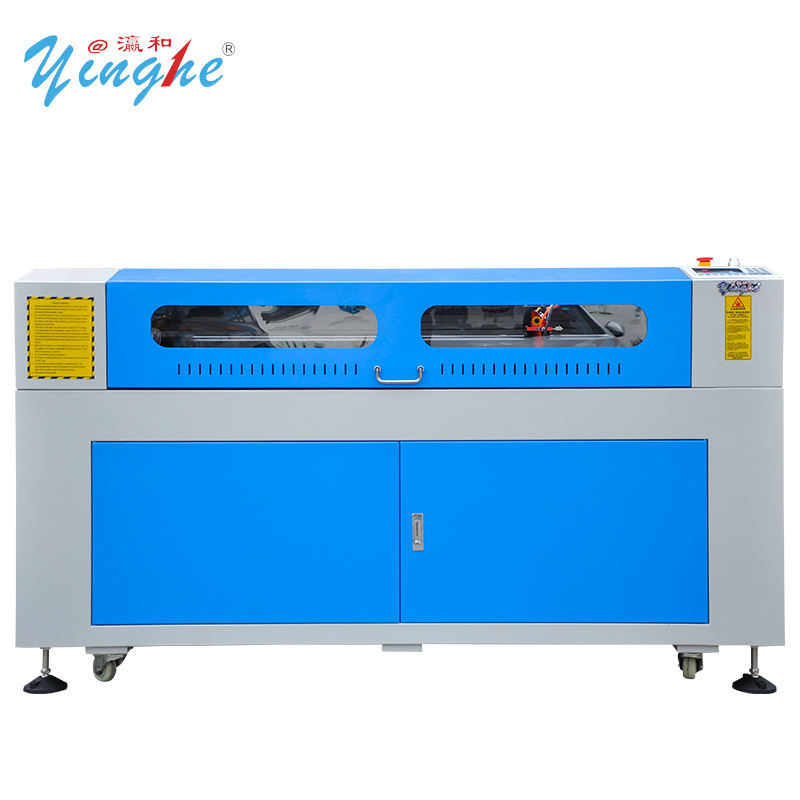
CO₂ laser machine: With a wavelength of 10.6μm, it focuses on non-metallic processing, such as fabrics, leather, and acrylic. It has a moderate cost and is the "main force" in the garment and advertising industries;
-
-
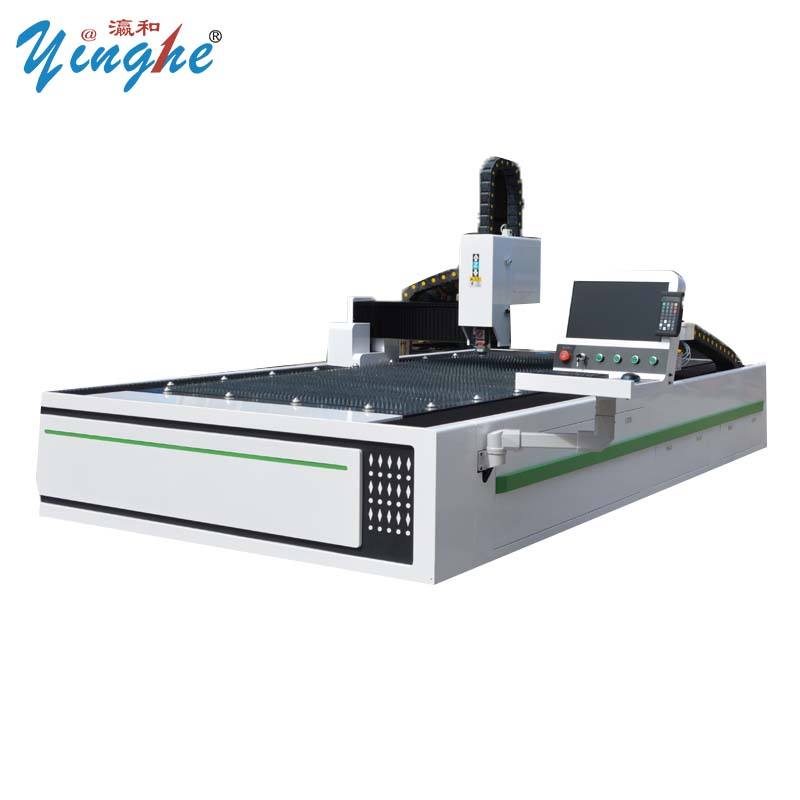
Fiber laser machine: With a wavelength of 1.06μm, it specializes in metal processing, such as steel, aluminum, and copper. It has fast cutting speed, high precision, and low maintenance cost. Now, almost all metal processing industries choose it;
-
-
Semiconductor laser machine: With a wavelength of 808-980nm, it is mainly used for marking. It has a small size and high efficiency, suitable for batch marking scenarios;
-
Ultraviolet (UV) laser machine: With a wavelength of <355nm, it belongs to "cold processing" with an extremely small heat-affected zone (HAZ), suitable for precision processing of PCB boards, glass, etc., such as the fine cutting of mobile phone screens.