
¿Qué es la impresión DTG?
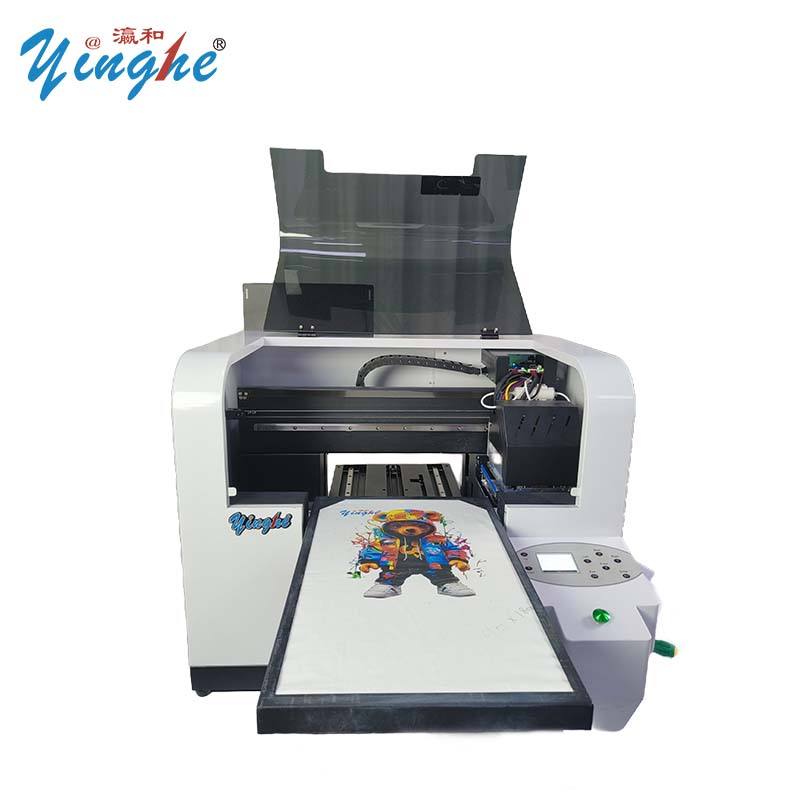
¿Qué es la impresora dtg?
Tecnología de impresión directa DTG (Direct-to-Garment), DTG Printer es una impresora a color diseñada específicamente para textiles.
¿Sobre qué materiales se puede imprimir DTG?
DTG es más adecuado para imprimir en colores claros y oscuros y textiles con alto contenido de algodón.
Materiales que requieren tratamiento previo: lino, seda y lana.
(Se debe aplicar un tratamiento previo a la prenda antes de imprimir para evitar que la tinta penetre en las fibras y realzar la viveza del color).
2.Cómo imprimir DTG:
I. Envía el diseño a todo color directamente desde tu computadora a la impresora digital con la prenda cargada.
II. Prepara la prenda: coloca la camiseta sobre la base de impresión.
III. Aplicar el pretratamiento: Aplicar uniformemente.
IV. Secar el pretratamiento: Utilice un secador instantáneo o una pistola de calor para secar.
V. Imprimir: La impresora realiza la impresión.
VI. Fijar el color: Coloca la camiseta estampada en la prensa térmica.
VII. Enfriamiento e inspección de calidad: Retire la camiseta, enfríela e inspeccione su calidad.
3. ¿Cuánto cuesta imprimir una prenda de vestir?
El coste de impresión de una camiseta es de sólo 0,3-0,5 dólares. Un juego de tinta puede imprimir unas 800 camisetas.
4.¿Cuánto duran las impresiones DTG?
En resumen: desde el inicio de la máquina hasta la finalización de la impresión, se necesitan aproximadamente de 2 a 15 minutos. Sin embargo, este tiempo varía mucho, dependiendo de varios factores clave:
Factores clave que influyen en el tiempo de impresión:
I. Tamaño y complejidad del diseño:
Los diseños pequeños de un solo color pueden tardar solo entre 2 y 4 minutos.
Los diseños extragrandes, a todo color, de alta resolución y detallados pueden tardar entre 10 y 15 minutos o incluso más.
II. Modelo de impresora y rendimiento:
Las impresoras DTG más antiguas o de nivel básico son más lentas, mientras que las impresoras DTG más nuevas, de alta velocidad y de grado industrial, con su mayor número de cabezales de impresión y servomotores más rápidos, pueden ser muy rápidas. Por ejemplo, algunos modelos de alta gama afirman poder completar un diseño de tamaño mediano en 60-90 segundos. III. Algunos materiales requieren procesamiento previo y posterior:
Pretratamiento: Después de rociar o aplicar la solución de pretratamiento, el material debe secarse al aire o secarse instantáneamente. Este proceso dura aproximadamente entre 1 y 3 minutos.
Fijación: Después de imprimir, calentar el material en una prensa térmica a aproximadamente 160°C durante 30-60 segundos.