Imprimantes UV : les « polyvalentes » polyvalentes qui brisent les limites des matériaux lors de l'impression. Voici tout ce que vous devez savoir !
Imprimantes UV : les « polyvalentes » polyvalentes qui brisent les limites des matériaux lors de l'impression. Voici tout ce que vous devez savoir !
Avez-vous déjà vu les peintures murales en verre accrocheuses dans les centres commerciaux ou les coques de téléphone personnalisées que possèdent vos amis ? Ou peut-être les publicités extérieures lumineuses et durables ? Derrière ces produits créatifs se cache souvent un « héros caché » : l’imprimante UV. Aujourd'hui, nous allons examiner de manière approfondie ce « polyvalent » dans le monde de l'impression et explorer ce qui le rend si populaire dans divers secteurs.
Table des matières
I. Qu'est-ce qu'une imprimante UV ?
II. Quels sont les types courants d’imprimantes UV ?
VI. FAQ : les 5 questions les plus courantes sur les imprimantes UV
I. Qu'est-ce qu'une imprimante UV ?
En termes simples, une imprimante UV est un appareil d'impression qui utilise une encre durcissable aux UV et sèche instantanément l'encre grâce à des lampes ultraviolettes (UV). Contrairement aux imprimantes traditionnelles, il n’est pas nécessaire d’attendre que l’encre sèche naturellement ; une exposition rapide à la lumière UV solidifie l'encre sur le support d'impression, éliminant ainsi les problèmes tels que les bavures et les bavures de couleur.
Plus important encore, elle brise la dépendance traditionnelle au « papier » : qu'il s'agisse de matériaux durs comme le verre, le métal et le bois, ou de matériaux souples comme le tissu et le cuir, voire de formes irrégulières comme les coques de téléphone et les gobelets thermos, les imprimantes UV peuvent tous les gérer, obtenant ainsi véritablement « tout peut être imprimé ».
II. Quels sont les types courants d’imprimantes UV ?
En fonction des matériaux d'impression et des scénarios, les imprimantes UV sont principalement divisées en quatre types, chacun avec son propre « domaine de spécialité ». Choisir le bon type peut maximiser sa valeur :
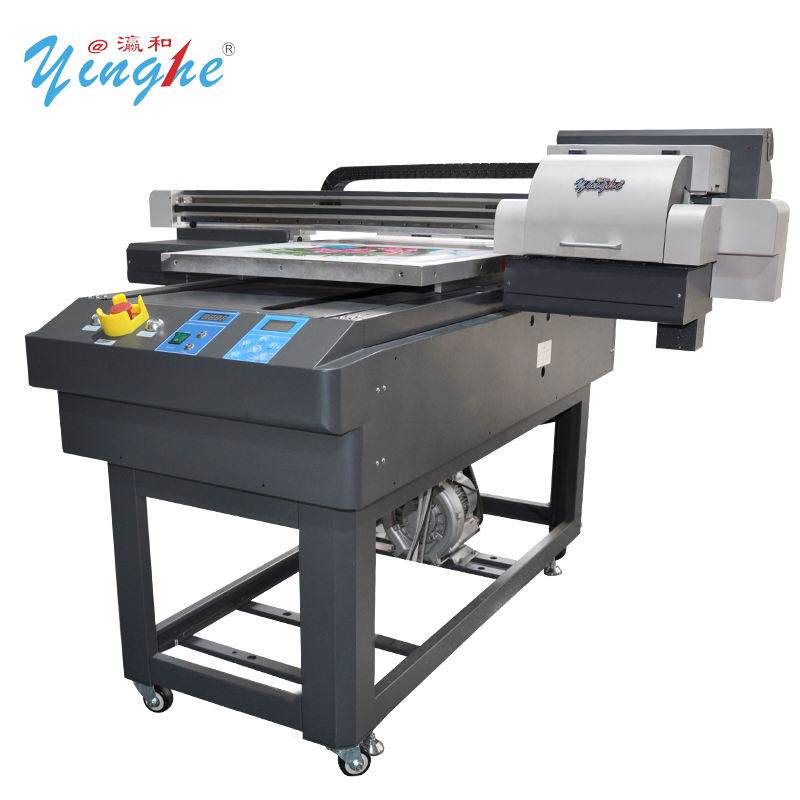
Caractéristique principale : la plate-forme d'impression est un « lit » plat, adapté aux matériaux durs et plats.
Scénarios applicables : peintures murales en verre, impression de meubles en bois, panneaux métalliques, coques de produits électroniques (tels que des étuis pour tablettes), présentoirs en acrylique, etc.
Avantages : Haute précision d'impression, capable de reproduire des motifs détaillés, adaptée à la personnalisation de produits durs de haute qualité.
Caractéristique principale : Imprime d'abord les motifs sur un film spécial, puis transfère les motifs sur le matériau cible via une technique de transfert (communément appelée « impression par séparation »).
Scénarios applicables : produits incurvés (tels que des tasses thermos, des mugs), objets irréguliers (tels que des porte-clés, des étuis pour écouteurs), cadeaux personnalisés en petits lots.
Avantages : Pas de contact direct avec le matériau, résolvant le problème des « impressions difficiles sur des surfaces irrégulières », avec une flexibilité extrêmement élevée.
3. Imprimantes UV roll-to-roll
Caractéristique principale : le matériau d'impression est un « rouleau » de matériau flexible, et la machine peut automatiquement alimenter et prendre les rouleaux, adaptés à l'impression continue par lots.
Scénarios applicables : tissu de caisson lumineux extérieur, autocollants de voiture, tissu de rideau, bannières, affiches flexibles, etc.
Avantages : Vitesse d'impression rapide, adaptée à la production par lots à grande échelle de matériaux flexibles, tels que les images promotionnelles extérieures réalisées par les agences de publicité.
4. Imprimantes UV hybrides (roll-to-roll)
Caractéristique principale : combine « l'impression à plat » et « l'impression rouleau à rouleau », capable de traiter à la fois des matériaux plats durs et des matériaux en rouleaux flexibles.
Scénarios applicables : entreprises de production multicatégories, telles que les entreprises d'ameublement qui produisent à la fois des peintures murales personnalisées (à plat) et des impressions de rideaux (en rouleau).
Avantages : Une machine répond à plusieurs besoins, réduisant les coûts d'investissement en équipement, adaptée aux petites et moyennes entreprises ayant un large éventail d'opérations.
III. Quels sont les principaux avantages de l’impression UV et pourquoi est-elle de plus en plus populaire ?
La popularité rapide des imprimantes UV est indissociable de ces cinq « avantages majeurs », chacun répondant précisément aux problèmes de l’industrie :
1. Compatibilité matérielle extrêmement forte, « tout peut être imprimé »
Du métal, du verre, de la pierre, du plastique au tissu, au cuir, au papier, au film et même à la céramique et au bois - tant qu'ils peuvent être placés sur la plate-forme d'impression (ou roulés dans la machine), les imprimantes UV peuvent imprimer dessus. Par rapport aux limitations des imprimantes traditionnelles qui « ne peuvent imprimer que sur papier », ses limites d'application sont presque illimitées.
2. Haute efficacité, imprimez et séchez immédiatement sans délai
L'encre traditionnelle nécessite plusieurs heures, voire une journée, pour sécher après l'impression, tandis que l'encre UV peut se solidifier en 0,1 seconde après avoir été exposée à la lumière UV. Les éléments imprimés peuvent être emportés et utilisés immédiatement après l'impression, sans attendre. Pour les entreprises, cela signifie « commande et livraison le jour même », améliorant considérablement l'efficacité de la production.
3. Respectueux de l'environnement et durable, équilibrant le « niveau d'apparence » et la « praticité »
Respectueuse de l'environnement : l'encre UV ne contient pas de composés organiques volatils (COV) et ne dégage pas d'odeurs piquantes comme les encres traditionnelles à base de solvants. Il convient à la production intérieure (telle que l'impression de décoration intérieure) et répond aux normes nationales de protection de l'environnement.
Durable : l'encre solidifiée a une adhérence extrêmement forte et résiste à l'eau et aux rayures. Lorsqu’il est utilisé à l’extérieur, il peut également résister aux rayons ultraviolets (sans se décolorer). Par exemple, l’impression UV sur les panneaux d’affichage extérieurs peut conserver des couleurs vives pendant 2 à 3 ans, ce qui est plus de deux fois plus durable que la peinture au pistolet traditionnelle.
4. Faible coût pour une personnalisation personnalisée, même pour de petits lots
L'impression personnalisée traditionnelle nécessite une « fabrication de plaques » et le coût des commandes de petits lots est extrêmement élevé (par exemple, pour l'impression de 10 coques de téléphone, le coût de fabrication des plaques peut être supérieur au coût d'impression). Cependant, les imprimantes UV ne nécessitent pas de fabrication de plaques et même si un seul produit est imprimé, le coût peut être contrôlé. Cela rend possible une « personnalisation personnalisée en petits lots », comme la création de porte-clés exclusifs pour les magasins culturels et créatifs ou la personnalisation d'un petit nombre de cadeaux pour les entreprises.
5. Haute fidélité des couleurs et qualité d'image fine
L'encre UV a une large gamme de couleurs et peut reproduire avec précision les détails des couleurs au niveau de la photo. Qu'il s'agisse de dégradés de couleurs, de motifs complexes ou de logos haute définition, ils peuvent tous être présentés clairement. Par exemple, lors de la personnalisation de peintures murales, les détails des paysages et des personnages peuvent rivaliser avec les œuvres peintes à la main, répondant ainsi aux exigences de conception haut de gamme.
IV. Les domaines d'application des imprimantes UV sont si vastes !
Des biens de consommation quotidienne à la production industrielle, les imprimantes UV ont pénétré dans 7 domaines principaux. Après avoir lu ceci, vous constaterez que c’est beaucoup plus proche de nos vies que vous ne l’imaginiez.
1. Objets promotionnels et cadeaux d'entreprise
Carnets personnalisés, tasses isothermes, porte-clés offerts en cadeau lors d'événements d'entreprise, badges et sacs en toile exclusifs dans les magasins culturels et créatifs, ou encore souvenirs de mariage (comme des mugs imprimés avec les photos du couple), ces produits personnalisés en petites séries constituent presque tout le « territoire » de l'impression UV.
2. Signalisation et graphisme (secteur de la publicité)
Panneaux d'affichage extérieurs, panneaux directionnels de centres commerciaux, publicités de véhicules, caissons lumineux de stations de métro, autocollants de vitrines... La durabilité et les performances des couleurs de l'impression UV en font la « technologie préférée » dans l'industrie de la publicité, particulièrement adaptée aux scénarios d'utilisation extérieure à long terme.
3. Accessoires électroniques personnalisés
Étuis de téléphone, housses de protection pour tablettes, coques d'écouteurs, coques de power bank - les "équipements électroniques exclusifs" que les jeunes aiment aujourd'hui sont pour la plupart le résultat d'imprimantes UV à plat ou d'imprimantes UV DTF. Même pour les modèles de niche, ils peuvent être imprimés avec précision.
4. Emballage et réalisation de prototypes
Emballages de produits en petits lots (tels que des boîtes à savon, des boîtes d'emballage pour les cosmétiques de niche), des échantillons de prototypes de produits (tels que des échantillons d'emballage réalisés par des designers) - les imprimantes UV peuvent rapidement transformer des « ébauches de conception en objets physiques », sans attendre la production par lots en usine, raccourcissant ainsi considérablement le cycle de recherche et de développement.
5. Design d’intérieur et décoration de la maison
Peintures murales personnalisées, impression de meubles en bois (tels que des motifs sur les portes d'armoires, les bureaux), motifs de cloisons en verre (tels que des logos sur le verre des bureaux), murs de fond en carrelage - l'impression UV transforme la décoration de la maison de « l'uniformité » à « l'unicité ». De nombreuses entreprises de décoration l’utilisent pour créer des solutions personnalisées haut de gamme.
6. Signalisation industrielle et marquage des pièces Numéros sur les pièces mécaniques, numéros de modèle des composants électroniques et étiquettes sur les pièces automobiles - ces marquages industriels qui nécessitent une « résistance à l'usure et à la corrosion » peuvent être fermement fixés sur les pièces métalliques et plastiques après impression UV. Ils ne tomberont pas même après une utilisation à long terme, répondant aux exigences strictes de la production industrielle.
7. Impression textile et tissu
T-shirts personnalisés, tissus pour rideaux, imprimés de housses de canapé, modèles de robes de mariée - l'impression textile UV résout les problèmes de « solidité des couleurs incertaine et de texture dure » dans l'impression sur tissu traditionnelle. Les tissus imprimés sont doux et respirants, et les couleurs ne se décolorent pas même après plusieurs lavages. Ils sont très appréciés par les entreprises de vêtements et de tissus domestiques.
V. Conclusion : les imprimantes UV, plus que de simples « imprimantes », sont des outils pour donner vie à la créativité
De « l'impression uniquement sur papier » à « l'impression sur tout », les imprimantes UV ont non seulement changé le paysage de l'industrie de l'imprimerie, mais sont également devenues les outils essentiels pour promouvoir la « personnalisation personnalisée » et la « production en petits lots ». Qu'il s'agisse d'agences de publicité, d'entreprises d'ameublement, de commerçants culturels et créatifs ou de fabricants industriels, ils peuvent tous réaliser une « monétisation créative » grâce à cela - après tout, à une époque qui recherche la « différenciation », être capable de produire rapidement des produits personnalisés signifie d'abord saisir les opportunités du marché.
Si vous envisagez de vous lancer dans le secteur de la personnalisation ou de mettre à niveau votre équipement d'impression existant, les imprimantes UV méritent certainement votre attention : leur flexibilité, leur efficacité et leur durabilité vous permettront de découvrir plus de possibilités en matière d'« impression ».
VI. FAQ : les 5 questions les plus courantes sur les imprimantes UV
1. Sur quels matériaux les imprimantes UV peuvent-elles imprimer ?
Presque tous les matériaux courants peuvent être recouverts : les matériaux durs (verre, métal, bois, plastique, céramique, acrylique), les matériaux flexibles (tissu, cuir, tissu pour caisson lumineux, film), et même les matériaux courbés/irréguliers (tasses isothermes, coques de téléphone). Tant qu’ils peuvent être réparés, ils peuvent être imprimés.
2. Les encres utilisées pour l’impression UV sont-elles respectueuses de l’environnement ? Sont-ils adaptés à une utilisation en intérieur ?
Oui, ils le sont ! Les encres UV ne contiennent pas de COV (composés organiques volatils), n'ont pas d'odeur âcre et ne produisent pas de substances nocives pendant le processus d'impression. Ils conviennent parfaitement à la production en intérieur (comme les peintures murales pour la maison, les décorations de chambres d'enfants), et les femmes enceintes et les enfants peuvent également entrer en contact avec les produits imprimés.
3. Les produits finis issus de l’impression UV sont-ils durables ? Peuvent-ils être lavés à l'eau ?
Très résistant ! L'encre durcie a une forte adhérence et ne craint ni les rayures ni l'eau. Pour une utilisation en extérieur, ils peuvent résister aux rayons ultraviolets (sans se décolorer pendant 2-3 ans), et pour l'impression textile, ils peuvent être lavés 10 à 20 fois sans se décolorer (il est recommandé de les laver à l'envers et d'éviter la lumière directe du soleil).
4. Est-il rentable d’utiliser des imprimantes UV pour la personnalisation de petits lots ?
Oui c'est le cas! L'impression traditionnelle nécessite la fabrication de plaques, et le coût de fabrication des plaques pour les commandes en petits lots (telles que 10 à 50 pièces) peut représenter 80 % du coût ; bien que les imprimantes UV ne nécessitent pas de fabrication de plaques, le « coût unitaire » pour 1 pièce et 100 pièces n'est pas très différent, ce qui rend la personnalisation en petits lots très rentable.
5. Comment les débutants devraient-ils choisir les imprimantes UV ?
Cela dépend de vos principaux besoins :
Si vous imprimez principalement sur des matériaux durs (tels que des peintures murales, des panneaux métalliques) → choisissezImprimantes UV à plat;
Si vous imprimez principalement sur des matériaux souples (tels que des tissus, des autocollants de voiture) → choisissez des imprimantes UV roll-to-roll ;
Si vous fabriquez à la fois des matériaux durs et flexibles et avez une activité diversifiée → choisissez des imprimantes UV hybrides ;
Si vous imprimez principalement des produits irréguliers en petits lots (tels que des tasses, des porte-clés) → choisissezImprimantes UV DTF.