2025-11-26

Guide for Selecting Industrial Embroidery Machines

As a core piece of equipment in garment production, the selection of industrial embroidery machines directly affects production efficiency, product quality, and investment returns. Garment enterprises of different scales have distinct priorities for selection due to variations in production needs, budget costs, and development stages, requiring precise decision-making based on their actual circumstances.

I. Selection Factors by Enterprise Scale

(1) Small-Scale Garment Production Studios (Start-Ups)

Such enterprises mainly undertake small-batch, multi-category orders, with limited budgets and high requirements for equipment flexibility. The focus of selection should be on "cost-effectiveness" and "multi-functional adaptability":

1.   Functional Diversity: Prioritize multi-needle machines (12-needle or 15-needle), with an embroidery area of no less than 300×400mm, and support for multiple modes such as cap embroidery, garment embroidery, and flat embroidery. This enables handling of orders for T-shirts, hats, children's clothing, and other categories, avoiding missed business opportunities due to single-function equipment.

2.   Initial Budget Control: The unit price of the equipment should be controlled within 30% of the enterprise's initial working capital to avoid excessive investment affecting daily operations. at the same time,pay attention to equipment energy consumption (e.g., standby power ≤ 50W) to reduce long-term operating costs.

3.   Basic Technical Support: Choose manufacturers that provide free operation training to ensure the team can get started quickly. Prioritize models with simple fault self-detection functions to reduce reliance on early maintenance.

(2) Medium-Small-Scale Enterprises (With Certain Scale)

These enterprises have stable order volumes and need to balance "efficiency improvement" with "cost control" while ensuring production continuity:

1.   ROI Calculation: Comprehensively calculate the Total Cost of Ownership (TCO), including equipment purchase price, consumable (embroidery thread, bobbin thread) costs, maintenance costs, and labor costs. For example, a high-speed machine may cost 15% more upfront but can reduce labor costs by 20% and defect rates from 5% to 2%, typically recovering the price difference within 1.5-2 years.

2.   Production Stability: Select models designed for high-intensity production (8-12 hours per day), with core indicators meeting: thread breakage rate ≤ 0.5 times per 1,000 stitches, and embroidery frame operation error ≤ 0.05mm. Prioritize brands equipped with thread breakage detection devices to reduce downtime for adjustments.

3.   Fabric Adaptability: The machine should stably handle lightweight chiffon (weight ≤ 80g/㎡) to 5mm-thick knitted fabrics, and be compatible with composite material embroidery with sequins and beads, meeting the needs of mid-to-high-end orders (e.g., wedding dress sequin embroidery, denim appliqué embroidery).

4.   Technical Support and Spare Parts Supply: Prioritize manufacturers with local service centers, requiring spare parts delivery cycles ≤ 3 days. Pay attention to the versatility of wearing parts (e.g., needles, hooks) to avoid increased procurement costs due to specialized parts.

(3) Medium-Scale Professional Garment Manufacturers

These enterprises focus on mass production and have higher requirements for equipment "automation", "precision", and "compatibility" to support large-scale, standardized production:

1.   Automation Level: The automatic thread trimming function should meet "trimmed thread residue length ≤ 3mm" to avoid subsequent manual trimming; the automatic color change response time ≤ 0.8 seconds, with color change accuracy error ≤ 0.1mm, ensuring natural color connection in multi-color embroidery patterns.

2.   Production Efficiency: Focus on the matching of Stitches Per Minute (SPM) and the number of heads. For a daily output of ≥ 500 pieces, 6-8 head models with stable SPM (1,000-1,200 stitches) are recommended; single-head models should ensure SPM ≥ 1,500 stitches without overheating during 8 hours of continuous operation.

3.   Precision and Intelligent Compensation: Positioning accuracy must be strictly controlled within ±0.1mm, with AI adaptive compensation function that automatically adjusts stitch length and tension based on fabric elasticity (e.g., spandex fabrics) to avoid pattern deformation.

4.   Software and Compatibility: The software should support batch import of AI/PSD files (processing ≥ 100 files at a time), be compatible with the Pantone color library (ensuring color reproduction ≥ 95%), and read mainstream embroidery file formats such as DST, PES, and JEF, adapting to output requirements of different design software.

(4) Large-Scale Embroidery Product Manufacturers

These enterprises are mostly involved in export business and large-scale production lines, requiring selection to balance "maximum efficiency", "compliance", and "system integration capabilities":

1.   High-Efficiency Production Configuration: Prioritize 12-16 head high-speed models (SPM ≥ 1,800 stitches) that support multi-machine linkage (realizing order allocation and progress monitoring via MES systems). Equip with automatic feeding devices to reduce manual loading/unloading time, increasing production line utilization to over 90%.

2.   Environmental Compliance Requirements: For products exported to the EU or the US, select models certified by OEKO-TEX® Standard 100 (restricting harmful substance residues) and GOTS (Global Organic Textile Standard, applicable to organic fabric production). Equipment energy consumption must comply with IEC 60034 standards (no-load energy consumption ≤ 100W) to reduce carbon footprint and meet customer environmental requirements.

3.   Equipment Expandability: Reserve interfaces for future upgrades (e.g., adding laser engraving modules, automatic defect detection functions) and be compatible with the enterprise's existing ERP system to realize real-time synchronization of production data (e.g., output, consumable loss), facilitating cost control and order traceability.

II. Core Comprehensive Selection Suggestions

1.   Rationally View the "Speed" Indicator: Higher SPM of embroidery machines is not always better. For example, models with SPM ≥ 2,000 stitches have a 30% increase in embroidery frame vibration amplitude during high-speed operation, easily causing skipped stitches and thread breaks. The actual effective output may be lower than that of stable models with SPM 1,500 stitches. It is recommended to choose based on order categories: prioritize high speed for flat embroidery orders, and prioritize stability for complex appliqué or bead embroidery orders.

2.   Beware of Hidden Economic Costs: Avoid choosing low-quality models to save 20% of procurement costs. Low-quality embroidery thread easily wears the needle bar (doubling the replacement frequency), and increased defect rates lead to a 15%-20% rise in fabric loss costs, which actually increases total expenditure in the long run. It is recommended to select brands with original consumables; although the unit price is 5% higher, it can reduce maintenance and loss costs by more than 50%.

3.   Focus on "Continuous Operation Efficiency": Models with a large embroidery area (e.g., 400×500mm) and automatic thread trimming/color change functions can reduce manual intervention (from 3 times per hour to 1 time every 4 hours), extending the daily effective production time by 2-3 hours, which is especially suitable for mass order production.

4.   Include After-Sales Service in Core Decisions: "Downtime equals loss" in industrial production. Confirm whether the manufacturer meets the following requirements: ① Local engineers have received original factory training (ensuring a maintenance qualification rate ≥ 98%); ② Sufficient spare parts inventory (core components such as motherboards and motors ≥ 50 units); ③ Response time ≤ 2 hours (phone support) and on-site maintenance within 48 hours to minimize downtime.

III. Recommended Brand: Yinghe Embroidery Equipment

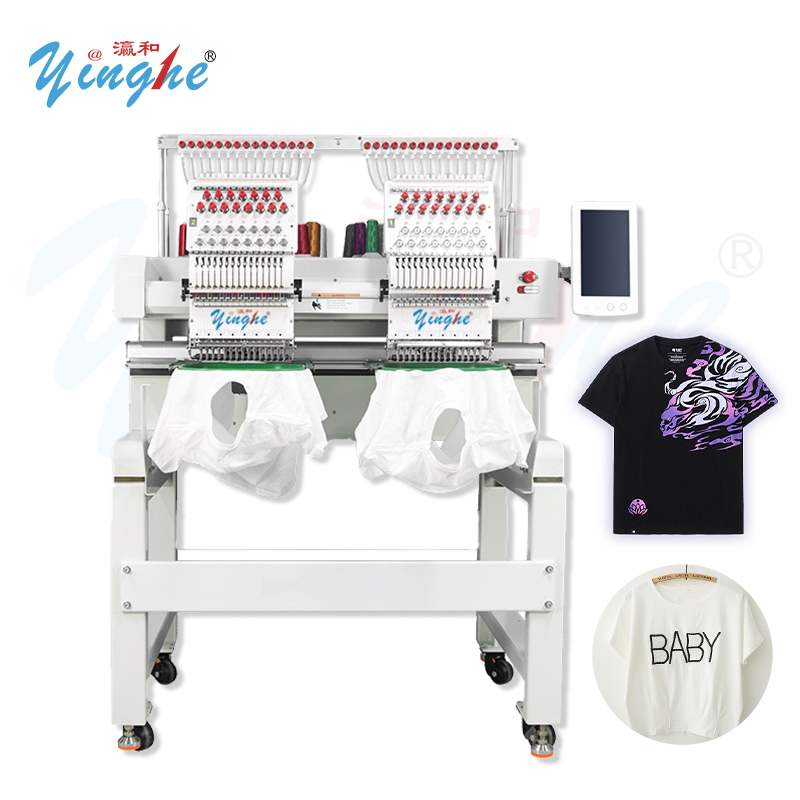
Founded in 2002, Yinghe is a professional Chinese embroidery equipment manufacturer. Its equipment parameters comply with EU CE and US UL industrial standards, and it supports customized modifications (e.g., reinforced embroidery heads for thick fabrics, multi-language operation interfaces for export orders). With over 20 years of export experience, it serves more than 190 countries and regions worldwide, making it particularly suitable for the needs of international customers.

Core Advantages:

1.Strong Technical Adaptability: Customizable equipment functions based on enterprise needs (e.g., adding automatic bead feeding modules, adjusting embroidery areas), with an equipment failure rate ≤ 1% per year, meeting the production scenarios of enterprises of different scales.

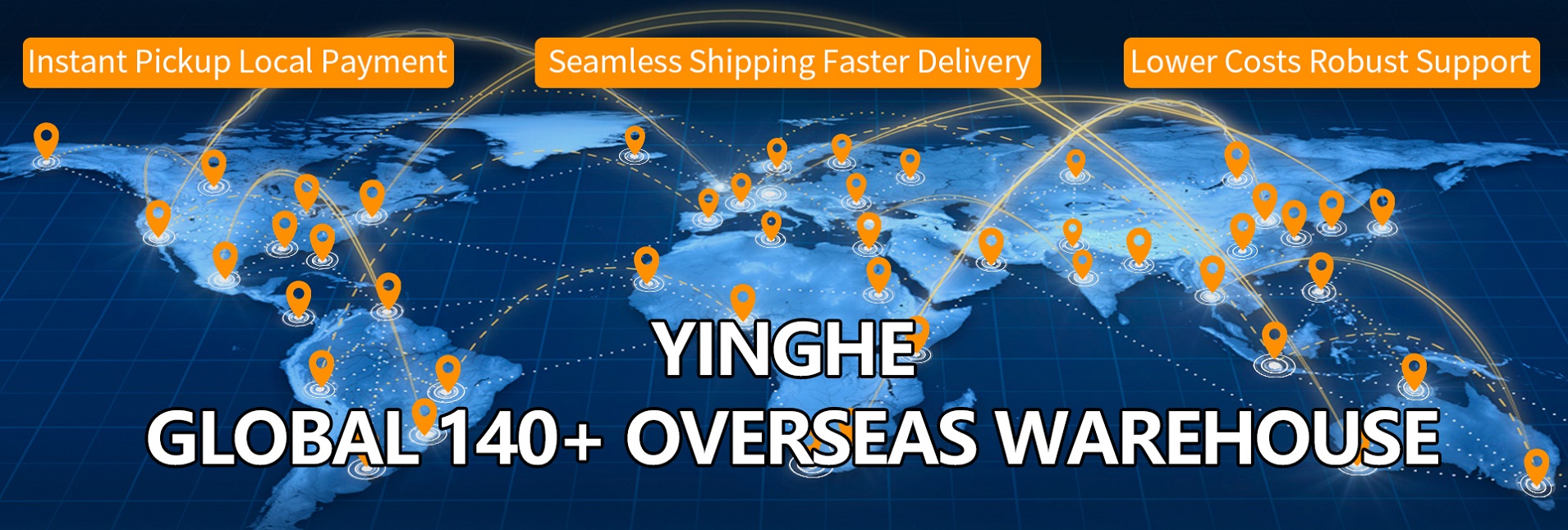
2.   Efficient Logistics Support: With over 140 local warehouses worldwide (continuously increasing in number), core spare parts (e.g., needles, hooks, control motherboards) are stored locally for nearby delivery. The spare parts delivery cycle is ≤ 24 hours, avoiding production stoppages due to lack of parts.

3.   Comprehensive After-Sales Service: Provide 24/7 multilingual customer service (supporting Chinese, English, Spanish, Arabic, etc.). Overseas warehouses are equipped with Chinese technical teams to achieve on-site maintenance within 48 hours, with a spare parts availability rate ≥ 95%, ensuring production continuity.