Guide d'impression DTG : Comment faire l'impression DTG
Sous-titre : Acquérez une compréhension approfondie de la technologie d'impression directe sur vêtement, maîtrisez chaque détail, des paramètres du logiciel au post-traitement, et créez des produits imprimés de haute qualité.
Introduction : Qu'est-ce que l'impression DTG ? Pourquoi est-il si populaire ?
Lorsque vous réalisez des plaques de sérigraphie ou imprimez des films de transfert, vous vous demandez peut-être : existe-t-il une technologie ou une machine capable d'imprimer directement sur des textiles comme des T-shirts ?
Oui, il existe des machines qui effectuent l'impression DTG et peuvent imprimer les motifs de votre choix sur des T-shirts ou d'autres textiles en coton.
Contenu:
Qu'est-ce que l'impression à encre directe sur coton DTG ?
Le processus spécifique est le suivant :
Avantages de l’impression jet d’encre directe DTG Cotton
Avantages de la technologie d'impression :
Impression DTG à l'encre blanche - Résumé des avantages
Vêtements (substrats) adaptés à l'impression DTG :
DTG ou sérigraphie : comment choisir ?
Qu'est-ce que l'impression à encre directe sur coton DTG ?
L'impression numérique à l'encre directe est une technologie d'impression numérique qui imprime des motifs directement sur les surfaces du tissu.
Le principe de base est de saisir les informations du modèle dans un ordinateur. Après le traitement, l'encre est pulvérisée directement sur la surface du tissu à l'aide d'une tête d'impression. Les processus de séchage et de fixation des couleurs fixent solidement le motif au tissu.
L'impression numérique à encre directe offre les avantages d'une facilité d'utilisation, d'une efficacité de production élevée et d'une précision d'impression élevée. Il permet une production personnalisée et en petits lots pour répondre aux divers besoins du marché.
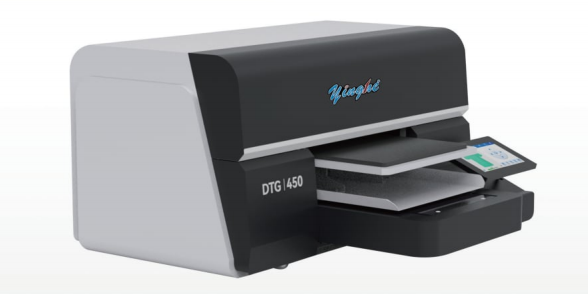
Équipée de la tête d'impression Epson I3200-A1, la conception de la tête d'impression double/quadruple offre une précision, une stabilité et une durabilité élevées. Les buses 3200 sont compatibles avec les systèmes de contrôle et disposent d'une fonction anti-collision intégrée, prolongeant la durée de vie de la tête d'impression.
Processus de transfert thermique à l'encre blanche DTG
La technologie d'impression directe numérique est une technique d'impression numérique qui imprime des motifs directement sur des surfaces en tissu.
Le processus spécifique est le suivant :
1. Étant donné que l'impression DTG utilise des fichiers numériques, vous devez traiter les images dont vous avez besoin aux formats BMP/TIF/JPG/EPS/PDF. Ces fichiers numériques sont lus à partir de l'imprimante ou du périphérique de stockage. En lisant les fichiers de cette façon, vous pouvez immédiatement mettre en file d'attente les images créées et les imprimer selon vos besoins.
2. Prétraitement : Le tissu en coton est immergé dans une solution de prétraitement pour le prétraitement, suivi d'un séchage.
3. Impression numérique : Un revêtement à base d'eau est pulvérisé directement sur le tissu en coton pré-séché à l'aide d'une machine à t-shirt numérique.
4. Fixation à haute température : le tissu en coton imprimé est chauffé par sections pour la fixation des couleurs.

Avantages de l’impression jet d’encre directe DTG Cotton
1. Bonne sensation au toucher
Étant donné que les particules d'encre utilisées dans l'impression numérique directe à jet d'encre sont extrêmement fines, atteignant le niveau nanométrique, elles peuvent facilement pénétrer dans les espaces entre les fibres du tissu, garantissant ainsi la durabilité sans affecter la douceur et le confort inhérents du tissu. Par conséquent, le plus grand avantage de l’impression numérique à jet d’encre directe est sa bonne sensation au toucher, et même l’impression sur de grandes surfaces n’affecte pas la respirabilité du tissu.


2. Affiche facilement des motifs et des couleurs complexes
L'impression numérique à jet d'encre directe utilise une impression contrôlée par ordinateur, ce qui la rend pratique et rapide. Il produit également des motifs complexes, des couches distinctes, des couleurs vives et des transitions de couleurs naturelles, ce qui donne lieu à des impressions qui rivalisent avec la qualité photographique. C’est pourquoi l’impression numérique à jet d’encre directe est de plus en plus populaire.
3. Commande minimum d'une seule pièce, aucune fabrication de plaques requise
Une commande minimale d'une pièce constitue un avantage important pour les entreprises et les particuliers qui ont besoin de petits lots de vêtements personnalisés. L'impression numérique à jet d'encre directe est simple, tout comme une imprimante, avec une impression rapide et pratique. Les lots de production sont illimités, permettant l'impression d'une seule pièce, de petits lots, une grande variété de produits et des temps de réponse rapides.

Avantages de la technologie d'impression :
1. En utilisant un équipement d'impression numérique informatisé pour imprimer des motifs sur des tissus textiles, il n'y a pas de chevauchement ni d'entrelacement de couleurs.
2. Aucune fabrication de plaques n'est requise, ce qui entraîne des vitesses de production rapides et des cycles de travail et de production raccourcis. 3. Aucune restriction de couleur, couleurs vives, excellente solidité des couleurs, toucher lisse et excellente respirabilité.
4. La quantité minimale d'impression est d'une seule pièce, ce qui met en évidence les avantages des petits lots et d'une grande variété de produits.
5. L'impression avec des colorants dispersés est respectueuse de l'environnement et réduit la pollution.
6. Créez facilement n'importe quel motif, avec une impression photo de haute précision, des motifs réalistes et des designs personnalisés.
7. Des techniciens professionnels en matière de séparation et de tonification des couleurs sont disponibles pour produire des nuanciers spécifiés par le client.
8. Les indicateurs techniques ont été testés par des organisations internationalement reconnues telles que ITS et SGS, avec une solidité des couleurs et une solidité à la lumière atteignant le niveau 4 ou supérieur.
Impression DTG à l'encre blanche - Résumé des avantages
1. Sa caractéristique la plus importante est qu'il produit des images directement de l'ordinateur sur le matériau, éliminant ainsi le besoin de fabrication de plaques et d'enregistrement des couleurs.
2. Par rapport aux méthodes d'impression traditionnelles, elle permet d'économiser du temps et des coûts en éliminant le besoin de fabrication de plaques. De plus, il utilise la technologie jet d'encre directement sur le tissu, préservant au maximum la couleur d'origine, sans avoir recours à un support de transfert intermédiaire.
3. Il utilise une encre à base d'eau respectueuse de l'environnement, peu coûteuse, efficace et inoffensive pour le corps humain.
4. Il offre une haute précision d’impression et des couleurs éclatantes.
5. Son fonctionnement convivial, avec quatre boutons simples haut/bas et une sortie et une impression par ordinateur, permet aux débutants de maîtriser rapidement le processus.
Vêtements (substrats) adaptés à l'impression DTG :
Tissu : 100 % coton est le meilleur choix. Des mélanges de coton et de polyester (par exemple 50/50) sont également possibles, mais nécessitent des ajustements au niveau du prétraitement et du dosage de l'encre blanche.
Couleur : explication détaillée des différences d'impression entre les vêtements clairs et foncés.
Texture de la surface : Une surface lisse est préférable à une texture rugueuse.
Conseils d'impression DTG :
Évitez les grandes zones de couverture solide : comment améliorer la sensation grâce à des effets de translucidité ou de crépitement.
Lignes fines et texte : assurez-vous d'une largeur suffisante pour éviter les ruptures de lignes pendant l'impression.
DTG ou sérigraphie : comment choisir ?
Coût: DTG (faible coût pour les petits lots), Silk Screen (faible coût pour les gros lots).
Complexité de conception : DTG (couleurs illimitées, dégradés), sérigraphie (couleurs limitées, tons directs).
Temps d'installation :DTG (presque aucune configuration), Silk Screen (long temps de fabrication des plaques).
Sentir:DTG (doux), Silk Screen (sensation gommeuse).
Conclusion:DTG convient aux petits lots de conceptions personnalisées et complexes ; La sérigraphie convient aux grands lots de commandes de couleurs simples.
Foire aux questions (FAQ)
Les impressions DTG se lavent-elles bien ?
Direct to Garment offre une bonne sensation au toucher et peut résister à 80 à 90 lavages

Quels sont les coûts et les bénéfices de l’impression DTG ?

Le DTG peut-il imprimer sur des vêtements en polyester ou noirs ?
Le DTG est une technologie polyvalente qui permet de gérer parfaitement les vêtements noirs et en polyester lorsqu'elle est réalisée correctement.
Combien de temps faut-il pour imprimer un t-shirt ?
La chronologie complète de l'impression DTG (étape par étape)
1). Pré-presse et préparation (2-4 minutes)
2). L'impression réelle (~ 2 à 5 minutes)
3). Post-presse et durcissement (~ 3-5 minutes)
Bien que l'imprimante elle-même ne prenne que 2 à 5 minutes pour appliquer l'encre, vous devez toujours prendre en compte le temps de préparation et de durcissement nécessaire. Pour un seul T-shirt personnalisé, une attente réaliste entre la commande et la réalisation est d'environ 10 à 15 minutes de temps de travail actif.
Quel est l’investissement requis pour démarrer une entreprise d’impression DTG ?
Vous pouvez démarrer une entreprise DTG très basique pour environ 8 000 à 12 000 USD. Un budget de démarrage plus confortable et professionnel est de 15 000 $ à plus de 25 000 $.

Comment entretenir les équipements DTG au quotidien ?
Entretien quotidien : imprimez quotidiennement des bandelettes de test et nettoyez régulièrement la tête d'impression pour éviter le colmatage.
Contrôle environnemental : Maintenir une température et une humidité appropriées dans la salle d'impression. (Remarque : température ambiante 15-30 ℃, humidité intérieure 35 %-60 %)
Conclusion:
L’impression DTG recèle un énorme potentiel à l’ère de la personnalisation personnalisée et de la production à la demande. Comparé au DTG et à la sérigraphie, le DTG est plus simple à utiliser et plus rapide, ce qui le rend plus adapté aux petites entreprises et aux studios individuels. Avec les progrès technologiques, les applications de DTG vont se développer et son fonctionnement deviendra encore plus simple et plus rentable.
Nous pouvons commencer en tant que studios individuels de bricolage ou de personnalisation de vêtements à petite échelle pour expérimenter cette technologie puissante et explorer le monde des vêtements personnalisés. Nous pouvons progressivement nous développer et devenir plus forts.
"Besoin de services d'impression DTG professionnels ? Contactez-nous dès maintenant pour un devis !" ou "Envie d'en savoir plus sur les techniques d'impression ? Contactez-nous !"