
Consejos para coser a máquina en casa: Cómo coser telas elásticas con suavidad
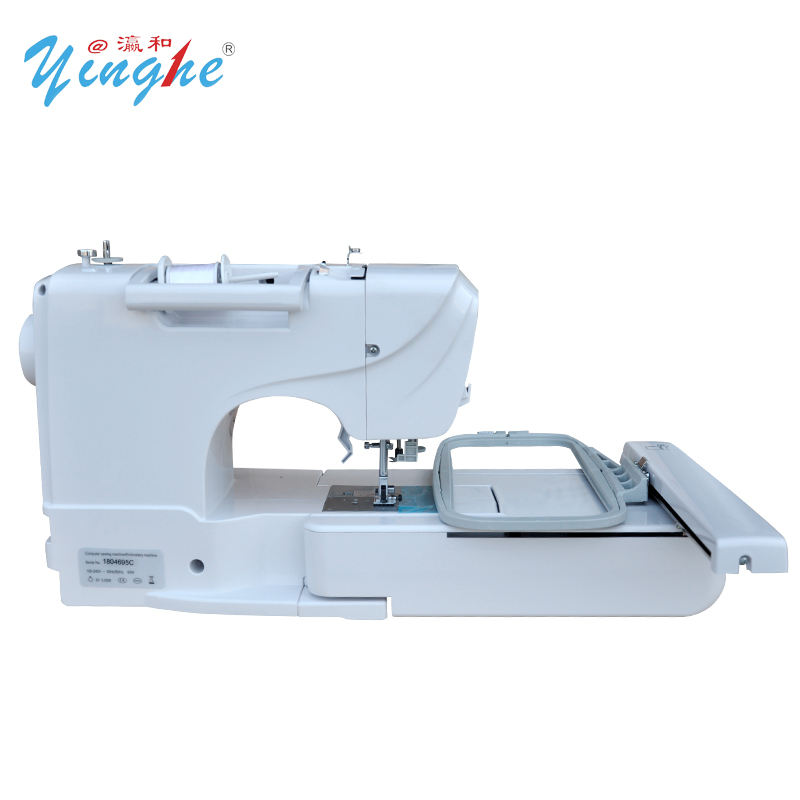
La tela elástica es una favorita entre muchos entusiastas de la costura.
A menudo la usamos para hacer varios tipos de ropa interior, camisetas, ropa deportiva y más. Sin embargo, coser tela elástica no es tan simple. Durante el proceso de costura, a menudo ocurren problemas como puntadas saltadas, arrugas en la tela y puntadas irregulares. Muchos usuarios en Xiaohongshu también preguntan: "¿Cuáles son las técnicas para coser tela elástica?"
Así que hoy, ¡hablemos específicamente sobre los puntos clave a tener en cuenta al coser tela elástica!
Selección de aguja de máquina de coser
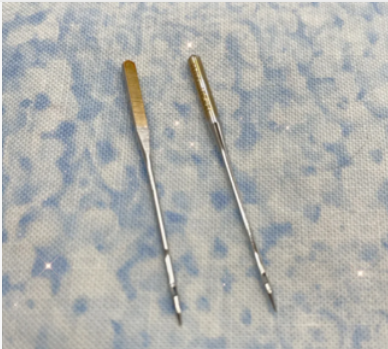
Las agujas de las máquinas de coser domésticas vienen en varios modelos, elegidos según el grosor de la tela. Para telas delgadas, puedes elegir agujas No. 9 o No. 11; para telas más gruesas, puedes elegir agujas No. 14 o No. 16.
Esto también se aplica a la tela elástica. Para coser tela elástica, podemos elegir agujas No. 14. Por supuesto, para aquellos que quieren resultados de costura aún mejores, también pueden elegir agujas de punta redonda, también conocidas como agujas de bola o agujas anti-salto, que pueden prevenir efectivamente que la tela salte puntadas.
Selección de puntada
Las máquinas de coser domésticas tienen varias puntadas, como puntada recta, puntada de ojal, puntada en zigzag, puntadas decorativas...
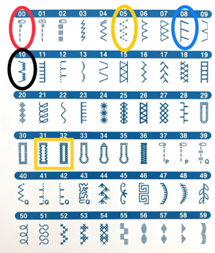
Al coser tela elástica ordinaria, generalmente usamos la puntada recta. Sin embargo, si cosemos bandas elásticas, cinturas elásticas o cintas, entonces necesitamos elegir la puntada especializada No. 05 para tela elástica (mostrada en el círculo amarillo en la imagen).
Por supuesto, también está el remalle, que es parte de la costura básica y se usa con frecuencia. Para remallar tela elástica, podemos elegir la puntada de remalle No. 08 (mostrada en el círculo azul en la imagen).
Además, para coser bastas de pantalón elásticas, necesitamos usar la puntada de bastilla oculta elástica No. 10 (mostrada en el círculo negro en la imagen). Para ojales en tela elástica, puedes elegir las puntadas No. 31 y No. 32 (mostradas en el recuadro amarillo en la imagen).
Selección de longitud y ancho de puntada
Después de seleccionar la puntada, también necesitamos ajustar apropiadamente la longitud y el ancho de la puntada. ¡La clave para coser tela elástica está aquí!
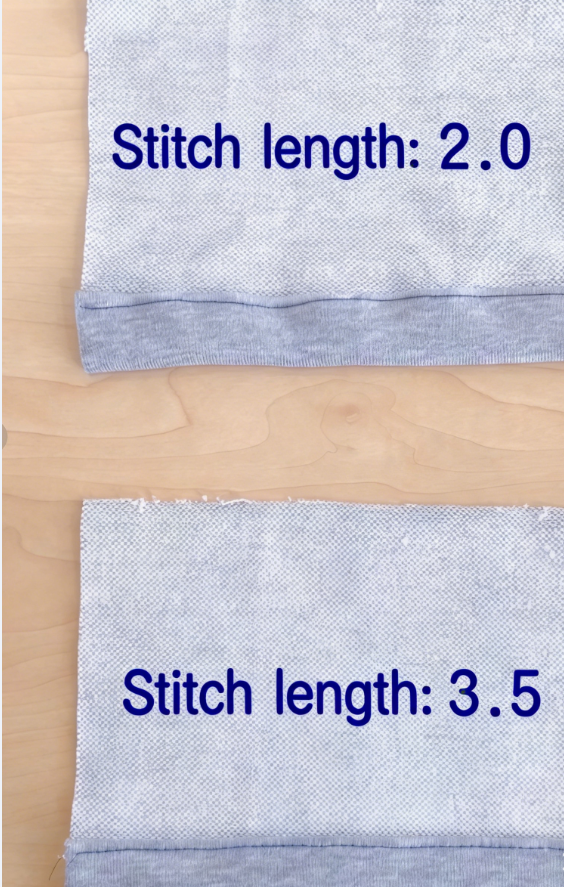
Necesitamos aumentar la longitud de la puntada a 3.5 mm.
La diferencia cuando la longitud de la puntada es 2.0 mm versus 3.5 mm: una es irregular, la otra es suave y plana
Técnica de operación
La técnica de costura también es muy importante. Primero, inserta la aguja en la tela y comienza a coser. Al alimentar la tela, trata de mantener una velocidad constante, mantén la tela recta sin torcerla y, al mismo tiempo, ¡ten cuidado de no tirar de la tela! Tirar puede provocar puntadas saltadas y rotura del hilo.
Así que ese es nuestro resumen de técnicas de costura para tela elástica.
¿Las has dominado? La práctica hace al maestro, ¡así que sé paciente y aprende lentamente! Por supuesto, no dudes en dejarnos un mensaje si tienes alguna pregunta.