2025-12-16

Research on the Selection Strategy of Embroidery Machines for Clothing Manufacturers and Case Studies of High-Quality Manufacturers

1

Table of contents

1 Introduction. 1

2 Analysis of Core Elements in Embroidery Machine Selection. 2

2.1 Core Demand Matching: The Premise Foundation. 2

2.2 Key Technical Parameters: The Core Assurance of Performance. 3

2.3 Purchase Considerations: Key Steps for Risk Avoidance. 4

2.4 Additional Notes. 5

3. Case of a High-Quality Embroidery Machine Manufacturer-Yinghe Electronic Instrument Co.,Ltd.

4 Conclusion. 6

1 Introduction

With the increasing demand for personalized and high-quality clothing products in the consumer market, embroidery technology, as a core means to enhance the added value of clothing, has expanded its application scenarios from traditional ready-to-wear to home textiles, high-end customization and other fields. As the core carrier of embroidery technology, the performance stability, process adaptability and operational convenience of embroidery machines directly determine the production efficiency, product qualification rate and market response speed of enterprises. However, the current embroidery machine market is characterized by numerous brands and complex categories, ranging from single-head small workshop models to multi-head automated production lines. The technical parameters, functional configurations and application scenarios of different equipment vary significantly, posing many challenges for the selection of embroidery machines by garment manufacturing enterprises.

Against this background, this article combines the specific scenarios and process demands of garment production to construct a comprehensive analysis framework for embroidery machine selection, clarifying the selection logic for enterprises of different scales and product categories. At the same time, it introduces cases of high-quality manufacturers in the industry, providing concrete references from aspects such as technology research and development, product systems, and service guarantees, to help garment manufacturing enterprises avoid selection risks and maximize the benefits of equipment investment.

2 Analysis of Core Elements in Embroidery Machine Selection

2.1 Core Demand Matching: The Premise Foundation

The product type and production scale of garment manufacturing enterprises are the core prerequisites for embroidery machine selection, and it is necessary to achieve precise matching between equipment functions and production demands.

2.1.1 Product Type Adaptation

• Ready-to-wear embroidery (T-shirts, sweatshirts, shirts, etc.): It is necessary to prioritize the selection of all-in-one flat and cap embroidery machines with functional expansion capabilities such as shoe embroidery, to flexibly switch between multiple types of orders. At the same time, attention should be paid to the equipment's adaptability to elastic and lightweight fabrics to avoid fabric stretching and deformation during embroidery.

• Home textile embroidery (curtains, bedding, cushions, etc.): The core demand is the stability and integrity of large-scale pattern embroidery. Large embroidery frames and multi-head models should be prioritized to ensure the uniformity of stitches and the accuracy of patterns for large-scale designs.

• High-end customization (cheongsams, wedding dresses, evening gowns, etc.): Emphasis is placed on the presentation of fine craftsmanship and complex patterns. High-needle-count and high-precision models should be selected, supporting the use of fine threads such as silk, to meet the demands of gradient embroidery, three-dimensional embroidery and other high-end techniques.

2.1.2 Production Scale Adaptation

• Small workshops / start-up factories: With small order volumes and a focus on personalized customization, selection should be based on cost-effectiveness, and single-head or double-head machines can meet the needs without over-pursuing high configurations and high production capacity.

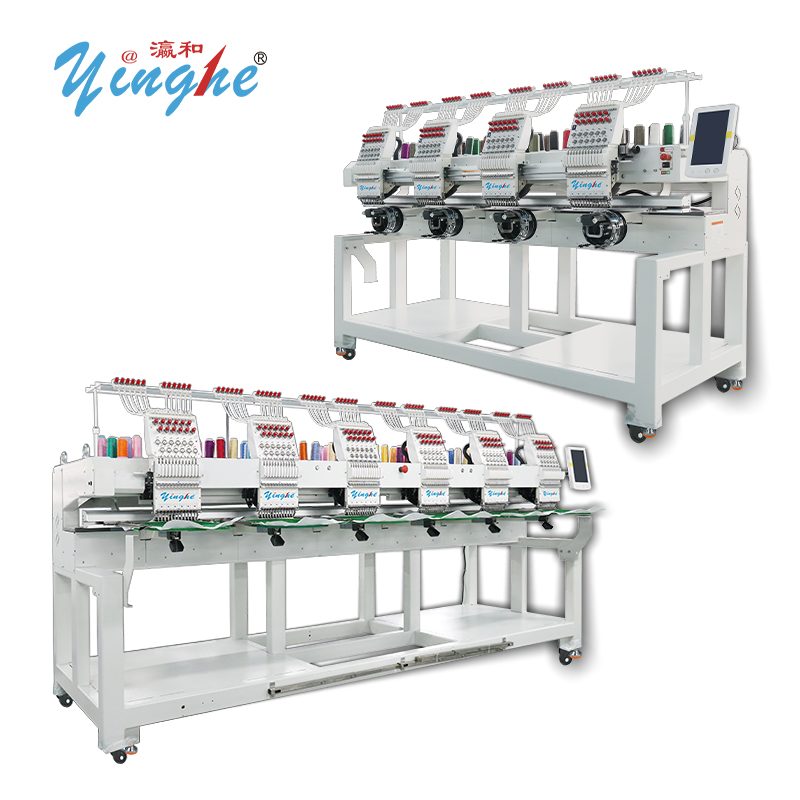
• Medium-sized factories (daily output of 500 pieces or more): Need to balance production capacity and flexibility, 6-12 head models are the best choice, allowing for a balance between batch production and multi-category orders.

• Large factories / OEM enterprises: Focusing on large-scale standardized production, multi-head models with 15 heads or more should be selected, and equipped with automatic feeding, automatic thread cutting and other automated systems to improve production efficiency by reducing manual intervention.

2.2 Key Technical Parameters: The Core Assurance of Performance

The technical parameters of embroidery machines directly determine their processing capabilities and production efficiency. The following core indicators need to be given special attention:

2.2.1 Number of Heads

The number of heads is positively correlated with the number of products embroidered at one time. The more heads there are, the higher the production capacity, but at the same time, the equipment purchase cost, floor space, and energy consumption will also increase accordingly. Enterprises need to seek a balance between production capacity demand and cost investment based on order volume and production site conditions.

2.2.2 Number of Needles (Number of Needles per Head)

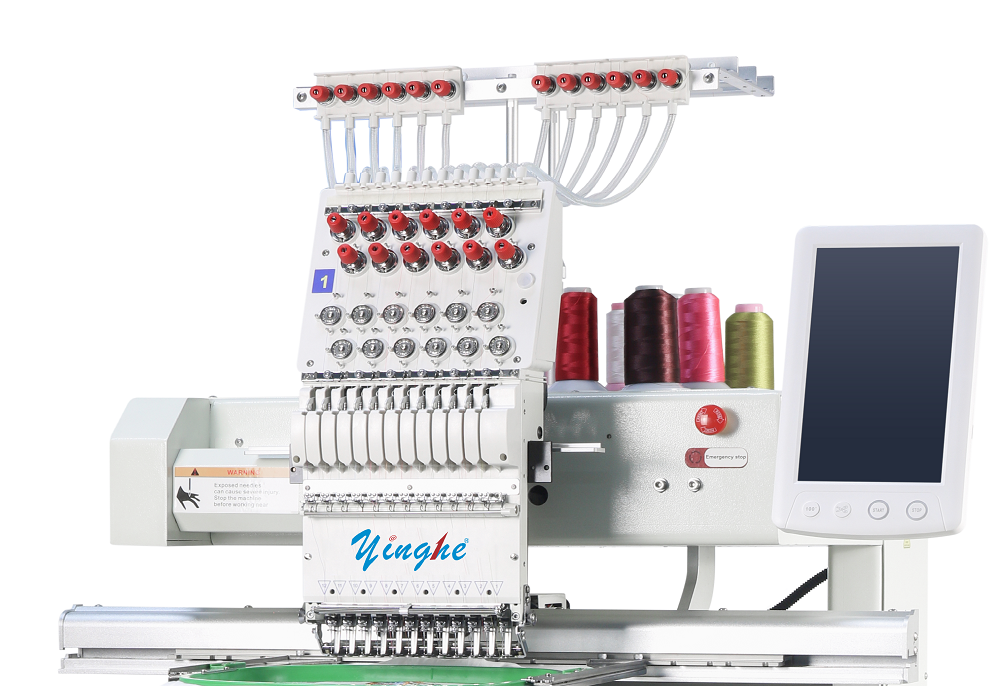
The number of needles corresponds to the number of colors of embroidery thread that can be used simultaneously. Conventional models have 9/12 needles, which can meet the needs of ordinary pattern embroidery; for high-end processes (such as complex patterns and gradient effects), 15/18 needle models should be selected to reduce thread changing frequency and improve production efficiency and pattern integrity.

2.2.3 Speed (Maximum Embroidery Speed)

The conventional speed range for flat embroidery is 800-1200 rpm. It should be noted that the stable speed in actual production is more important than the peak speed. Excessively high speed can easily lead to thread breakage and thread skipping. For garment embroidery, due to the greater elasticity of the fabric, it is recommended to choose a model with precisely adjustable speed (600-800 rpm) to ensure the stability of embroidery.

2.2.4 Frame Size

The frame size determines the maximum area of the embroidered pattern: small items (such as cuffs, logos, etc.) require a 300×200mm frame; large garment embroidery and home textile embroidery require a frame of 400×600mm or larger. At the same time, attention should be paid to the movement accuracy of the frame, with an error of no more than 0.1mm to avoid pattern misalignment.

2.2.5 Automation Functions

Automation functions are key to improving production efficiency and reducing defect rates: automatic thread cutting (preferably multi-head synchronous cutting) can reduce manual time; automatic color changing ensures color switching accuracy and avoids color differences; thread break detection can automatically stop and alarm when a thread breaks, reducing defect rates; automatic feeding/positioning functions are suitable for large-scale standardized production and reduce manual positioning errors.

2.2.6 Compatibility

The equipment should support mainstream embroidery formats such as DST, PES, EMB, and be compatible with commonly used design software in the factory. At the same time, it should have a wide range of fabric adaptability, through adjustable presser foot pressure and compatibility with multiple types of embroidery needles, to meet the embroidery needs of different materials such as cotton, linen, silk, and leather.

2.3 Purchase Considerations: Key Steps for Risk Avoidance

2.3.1 Evaluation of Manufacturer's Strength and Reputation

Prioritize brands with formal production qualifications and at least five years of industry experience to avoid purchasing machines from small workshops (which may have problems with parts shortages in the future). Through research on models used by similar enterprises in the industry and on-site visits to the manufacturer's production workshop and quality inspection process, evaluate the production scale and quality control capabilities of the enterprise.

2.3.2 After-sales Service Assurance

Confirm the response time and warranty period for after-sales service; pay attention to whether the manufacturer provides free pattern-making training, operation training, and long-term supply of spare parts (such as embroidery needles and bobbins, which need to be supplied stably over the long term).

2.3.3 On-site Machine Testing

Bring commonly used fabrics in the enterprise (such as pure cotton, silk) and complex pattern files for on-site testing, focusing on observing: whether there is thread skipping or breaking at high speeds; whether the edges of large patterns are neat and the color transitions are natural; whether the fabric stretches or deforms during garment embroidery.

2.3.4 Full-cycle Cost Calculation

In addition to the equipment purchase price, the cost of consumables (embroidery needles, bobbins, embroidery thread), energy consumption (high-power multi-head machines consume more electricity), and labor costs (high automation can reduce labor input) should be comprehensively calculated. Avoid blindly pursuing low prices, as low-priced machines often have poor precision and high failure rates, which may increase downtime losses.

2.3.5 Consideration of Equipment Expandability

Reserve space for equipment upgrades (such as adding more heads or installing an automatic feeding system in the future) to cope with changes in order types and scales; pay attention to whether the equipment supports network management, which is convenient for production data statistics and remote fault diagnosis, and meets the needs of factory digital management.

2.4 Additional Notes

• Voltage standard compatibility: If it involves foreign trade orders, it is necessary to confirm whether the voltage of the model is in line with the standards of the target market (such as 110V for the European and American markets);

• Contract terms standardization: Keep the purchase contract and after-sales terms, clearly define the responsibility division for fault repair (such as the distinction between human damage and quality issues).

3 Case of a High-Quality Embroidery Machine Manufacturer - Yinghe Electronic Instrument Co., Ltd.

3.1 Company Profile

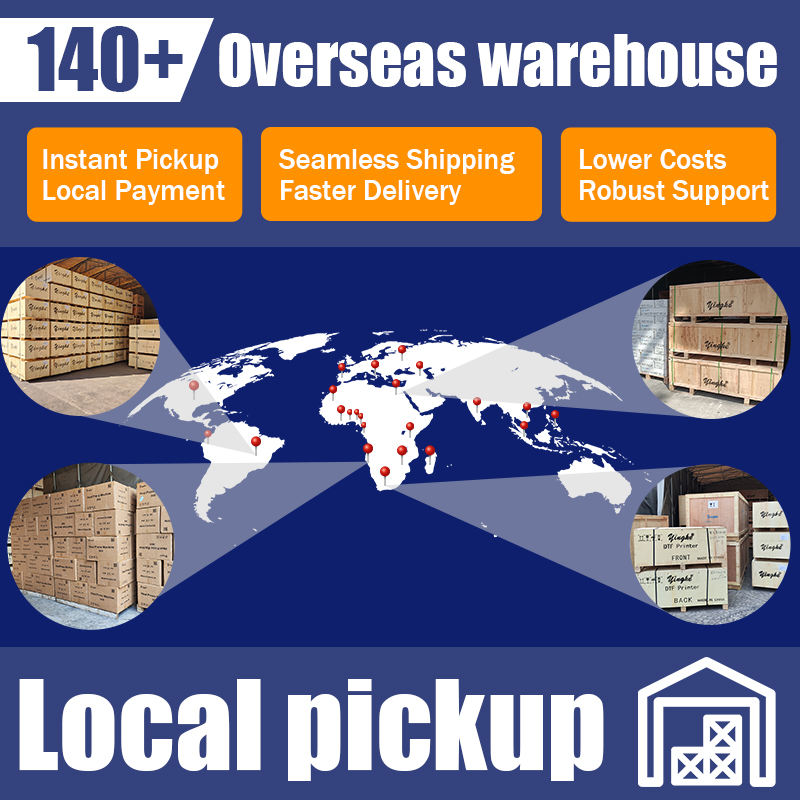
Yinghe Electronic Instrument Co., Ltd. (www.yinghevip.com)was established in 2002 and is a modern high-tech equipment enterprise integrating R&D, production, and sales. It is also the only international equipment supermarket in China with a cross-border e-commerce platform. After years of development, the company has built a global production and service network, with over 140 professional warehousing centers worldwide. Its products are sold to more than 200 countries and regions, and its scale, product range, and service level are among the best in the domestic industry.

3.2 Core Competitive Advantages

3.2.1 Professional R&D and Production Capacity

Since its establishment, Yinghe has been deeply engaged in the field of industrial Embroidery Machines, building a complete industrial chain system and a professional R&D team. It continuously focuses on the iteration of core technologies and process optimization. It has established a standardized production quality control system, and every process from component selection to complete machine assembly strictly follows industry professional standards to ensure stable performance and reliable quality of the products.

3.2.2 Full-scenario Product Matrix

Yinghe's embroidery machines are complete in categories and rich in functions, precisely covering various scenarios such as Garment Mmbroidery, home textile embroidery, High-end Customization, and small-batch personalized production. They can meet the production needs of all scales from small workshops to large OEM enterprises. Its product matrix is supported by professional technology, whether it is single-head/double-head machines suitable for small-batch customization or multi-head automated models for large-scale production, they all have excellent process adaptability and performance stability.

3.2.3 Global Service and Supply Chain Assurance

Relying on over 140 professional Warehousing Centers Worldwide, Yinghe has achieved local storage of complete machines, full series of accessories, and production raw materials, completely avoiding production halts caused by equipment failures or raw material shortages. It has also established a complete professional after-sales service network, covering equipment installation and commissioning, technical training, and fault maintenance, providing one-stop professional support to global customers.

3.2.4 International Market Recognition

With 15 years of export experience and stable product performance, Yinghe's embroidery machines have gained wide recognition in the global market. The advanced technology, reliable quality, and convenient service of its products have made it a preferred brand for many garment manufacturing enterprises.

4 Conclusion

The selection of embroidery machines is an important decision for garment manufacturing enterprises to enhance their core competitiveness. It should be based on "demand matching as the premise, technical parameters as the core, and risk avoidance as the guarantee", comprehensively considering factors such as product type, production scale, equipment performance, manufacturer strength, and after-sales service. Yinghe Electronic Instrument Co., Ltd., as an outstanding representative in the industry, provides reliable equipment solutions for garment manufacturing enterprises with its professional R&D and production capacity, full-scenario product matrix, global service network, and supply chain assurance.

In the future, with the acceleration of digital and intelligent transformation in the garment industry, embroidery machines will develop towards high precision, high automation, and high compatibility. When selecting equipment, clothing manufacturing enterprises should pay further attention to the intelligent functions of the equipment (such as network management and remote diagnosis) and the potential for technological upgrades. They should choose equipment that is both practical and forward-looking in line with their own development plans, laying a solid foundation for the long-term development of the enterprise.

References

[1] Textile Machinery Association. General Technical Conditions for Industrial Embroidery Machines. 2020.

[2] Wang Lijun. Research on the Application of Intelligent Manufacturing in Clothing Production Equipment. Journal of Textile Research, 2022, 43(5): 156-162. [3] Smith, J. & Lee, H. Total Cost of Ownership for Industrial Embroidery Machines. International Journal of Apparel Production, 2021, 14(3): 45-58.

[4] Chen Xiaohua. Evaluation Method of Investment Benefits for Production Equipment in Clothing Enterprises. Modern Enterprise Management, 2023(2): 88-91.