
Contour-Cutting Plotter: A Comprehensive Analysis of Definition, Core Technologies, Application Scenarios, and Product Features
What is Contour-Cutting Plotter?
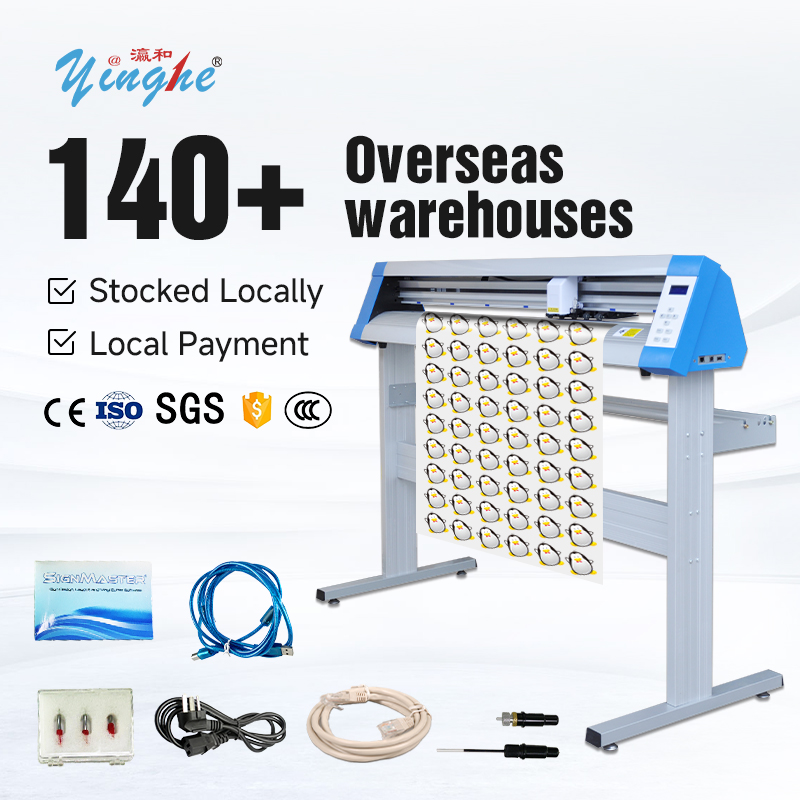
A contour-cutting plotter is an advanced numerical control cutting device upgraded from traditional plotters. Its core advantage lies in the "visual inspection + automatic positioning" function, which accurately tracks material edges or preset marking points to achieve efficient cutting of complex patterns and multi-color registration. It addresses the pain points of low efficiency and poor precision in manual alignment, and is widely used in advertising production, industrial mass production, personal DIY, and other scenarios. The detailed analysis from core dimensions is as follows:
I. Contour-Cutting Plotter Basic Definition and Core Working Principle
1. Definition of Contour-Cutting Plotter
A contour-cutting plotter is not an independent equipment type, but a general term for plotters with the function of "automatic contour tracking". Through visual sensors (cameras) or positioning systems, it identifies printed edges and positioning marks (such as cross marks, dots) on the material surface, calculates the offset of the cutting path in real time, drives the motor to adjust the position of the cutter head, and finally achieves precise alignment of "pattern - cutting" without repeated manual calibration.
2. What is Core Working Process of Contour-Cutting Plotter? (Based on Visual Contour Tracking Technology)
The standard process can be divided into 6 steps:
- Image Acquisition: Capture edge or marking point information by shooting the material surface with an industrial-grade camera (such as the 1280×720 global shutter sensor of LiYu MF1261);
- Preprocessing: Perform grayscale conversion and noise reduction through an FPGA (Field-Programmable Gate Array) chip. Some devices use "dual LED ring coaxial light sources" to solve imaging interference from high-reflective materials (such as reflective film, PET labels);
- Edge Extraction: Separate the target cutting contour (such as the text edges of advertising stickers, positioning marks) from the image using algorithms such as Sobel operator and least squares straight line fitting;
- Offset Calculation: Compare the position deviation between the preset design file and the actual image to generate compensation data (such as X/Y axis offset);
- Motion Control: Issue compensation commands to the servo/stepper motor to drive the cutter head to adjust the path in real time (such as the 17-bit encoder feedback of LiYu MF1261, ensuring a position loop bandwidth of 120Hz);
- Precision Cutting: The cutter head cuts according to the compensated path, and at the same time, the "no drag knife algorithm" (such as LELIK I1) reduces scratches during curve cutting to ensure smooth edges.
II. Key Technical Parameters: Core Indicators Determining Equipment Performance
The performance differences of contour-cutting plotters are mainly reflected in the following 5 key parameters, which are also the core basis for selection: